


Paris Transportation Guide
Updated · BootsnAll
Paris, like most dense cities, is most easily conquered using public transportation. There are even many people who live in Paris and don't own a car. Most visitors to the city are smart to avoid renting a car and sticking to public transportation to get around - but if you're planning lots of day trips into the countryside, to places where train and bus service is more sporadic, then having a rental car for some portion of your Paris visit might be a good option for you.
In order to figure out the best strategy for your particular trip to Paris, have a look through this list of all the various ways to get around in Paris.
>> Many people looking to master the transportation in a city are also looking for other travel-planning advice - which is why I'm happy to point you to our helpful visitor's guide to Paris, complete with links to just about every subject you could wish for.
>> And if you're looking for specific tips on how to get from Paris to other places in France and Europe (or vice versa), skip ahead to this section.
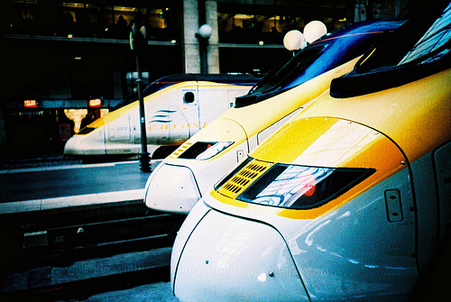 France's train system - the SNCF - is one of the best in the world. Trains normally depart and arrive on time, and the TGV or Tres Grand Vitesse (the country's bullet trains) move smoothly and cut your travel time between big cities in France as well as European capitals.
Second class accommodations on France's trains are so comfortable that there's really no need to opt for first class. The only negative here would be some of the WCs, which are not always kept in spotless condition. Trains that have meal service will show a knive and fork on the departure board (this might be as simple as an ambulating sandwich cart, however), but don't rely on meal service on all long train rides - it's usually a good idea to carry a bottle of water and a little snack with you, just in case.
Paris, as you might expect, is a major hub in the SNCF network, so it's exceptionally easy to get from Paris to other destinations in France as well as cities outside the borders. This is handy whether you're in Paris as part of a bigger tour of Europe or whether you're just hoping to take a day trip or two outside the capital during your visit.
>> For trips beyond Paris, also check out this information about train travel in France
Train tickets or a Eurail Pass?
You have two options when it comes to train travel in France - either you'll arrive in the country with your Eurail Pass and be using that instead of train tickets, or you'll be buying train tickets as you go. It's important to do a bit of math well before you leave home to see if you'll save money with a Eurail Pass (if you're taking a few day trips or traveling to several cities in addition to Paris, it's likely you will save money with a Eurail Pass), but if you get to Paris without one you can always buy tickets as you need them.
When you're weighing your options in the Eurail Pass v. train ticket debate, here's what you need to know:
France's train system - the SNCF - is one of the best in the world. Trains normally depart and arrive on time, and the TGV or Tres Grand Vitesse (the country's bullet trains) move smoothly and cut your travel time between big cities in France as well as European capitals.
Second class accommodations on France's trains are so comfortable that there's really no need to opt for first class. The only negative here would be some of the WCs, which are not always kept in spotless condition. Trains that have meal service will show a knive and fork on the departure board (this might be as simple as an ambulating sandwich cart, however), but don't rely on meal service on all long train rides - it's usually a good idea to carry a bottle of water and a little snack with you, just in case.
Paris, as you might expect, is a major hub in the SNCF network, so it's exceptionally easy to get from Paris to other destinations in France as well as cities outside the borders. This is handy whether you're in Paris as part of a bigger tour of Europe or whether you're just hoping to take a day trip or two outside the capital during your visit.
>> For trips beyond Paris, also check out this information about train travel in France
Train tickets or a Eurail Pass?
You have two options when it comes to train travel in France - either you'll arrive in the country with your Eurail Pass and be using that instead of train tickets, or you'll be buying train tickets as you go. It's important to do a bit of math well before you leave home to see if you'll save money with a Eurail Pass (if you're taking a few day trips or traveling to several cities in addition to Paris, it's likely you will save money with a Eurail Pass), but if you get to Paris without one you can always buy tickets as you need them.
When you're weighing your options in the Eurail Pass v. train ticket debate, here's what you need to know:
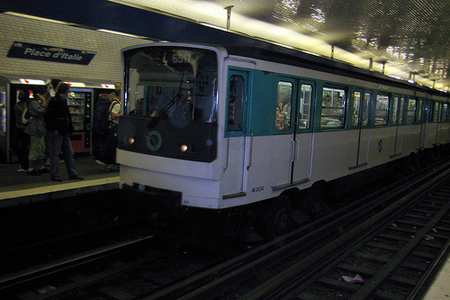 Paris's subway system called the Metro is an institution. It's the quick, inexpensive way to get around town. Generally, the Paris Metro is reasonably safe - watch out for your personal belongings in the same way that you would do so in any major cosmopolitan city.
Be aware that getting in and out of Metro stations almost always involves stairways, and even when there are elevators there may be a section with a couple steps as well, so it's not ideally suited to people who have difficulty with stairs. 'Seeing eye' dogs are allowed in the Metro - and anyone accompanying visually impaired travelers can ride for free.
Paris fares were overhauled in January 2025. The old zone system was replaced by a flat fare: one price for any metro or RER journey within the Ile-de-France region, and a second, lower flat price for buses and trams. The paper carnet of ten tickets is gone - you now load journeys onto a reusable Navigo Easy card, onto the Ile-de-France Mobilites app, or pay contactless at the gate. If you have loose paper tickets left from an older trip, use them up; they are being withdrawn. The official RATP Metro site has details on all the tickets available, including transportation passes, and here's our guide to the various options for Paris discount cards (again, including transportation passes).
>> Learn more about how to use the Paris Metro and be on the lookout for the most beautiful Paris Metro stations
RER Trains
While you may spend your whole time in Paris riding the underground trains and never know when you've hopped on an RER train vs. the regular Metro, it's a good idea to know about them.
Within the Paris that most tourists are spending time in, they're interlinked with the Metro lines to such a degree that many share the same stops and will take you to the same places. But they also go far beyond the borders of Paris - to places like Versailles and Disneyland Paris, as well as Charles de Gaulle Airport.
If you're riding any of the five RER lines within the city center, all you'll need is the same ticket you'll use on the Metro, so that part is simple. It's when you leave the city and head out for a day-trip somewhere that you'll need to get a special ticket.
>> Learn more about how to use RER trains in Paris
Buses in Paris
Even below the RER on most tourists' radar is the network of buses in Paris, but depending on where you're staying you might find that the most convenient form of public transportation from your Paris hostel's front door is a bus rather than a Metro stop. So it's a good idea to familiarize yourself with the buses, especially if you're going to be staying in or visiting any of the areas that are well-covered by bus lines.
>> Learn more about how to use buses in Paris
Paris's subway system called the Metro is an institution. It's the quick, inexpensive way to get around town. Generally, the Paris Metro is reasonably safe - watch out for your personal belongings in the same way that you would do so in any major cosmopolitan city.
Be aware that getting in and out of Metro stations almost always involves stairways, and even when there are elevators there may be a section with a couple steps as well, so it's not ideally suited to people who have difficulty with stairs. 'Seeing eye' dogs are allowed in the Metro - and anyone accompanying visually impaired travelers can ride for free.
Paris fares were overhauled in January 2025. The old zone system was replaced by a flat fare: one price for any metro or RER journey within the Ile-de-France region, and a second, lower flat price for buses and trams. The paper carnet of ten tickets is gone - you now load journeys onto a reusable Navigo Easy card, onto the Ile-de-France Mobilites app, or pay contactless at the gate. If you have loose paper tickets left from an older trip, use them up; they are being withdrawn. The official RATP Metro site has details on all the tickets available, including transportation passes, and here's our guide to the various options for Paris discount cards (again, including transportation passes).
>> Learn more about how to use the Paris Metro and be on the lookout for the most beautiful Paris Metro stations
RER Trains
While you may spend your whole time in Paris riding the underground trains and never know when you've hopped on an RER train vs. the regular Metro, it's a good idea to know about them.
Within the Paris that most tourists are spending time in, they're interlinked with the Metro lines to such a degree that many share the same stops and will take you to the same places. But they also go far beyond the borders of Paris - to places like Versailles and Disneyland Paris, as well as Charles de Gaulle Airport.
If you're riding any of the five RER lines within the city center, all you'll need is the same ticket you'll use on the Metro, so that part is simple. It's when you leave the city and head out for a day-trip somewhere that you'll need to get a special ticket.
>> Learn more about how to use RER trains in Paris
Buses in Paris
Even below the RER on most tourists' radar is the network of buses in Paris, but depending on where you're staying you might find that the most convenient form of public transportation from your Paris hostel's front door is a bus rather than a Metro stop. So it's a good idea to familiarize yourself with the buses, especially if you're going to be staying in or visiting any of the areas that are well-covered by bus lines.
>> Learn more about how to use buses in Paris
Train Travel In & Around Paris
France's train system - the SNCF - is one of the best in the world. Trains normally depart and arrive on time, and the TGV or Tres Grand Vitesse (the country's bullet trains) move smoothly and cut your travel time between big cities in France as well as European capitals.
Second class accommodations on France's trains are so comfortable that there's really no need to opt for first class. The only negative here would be some of the WCs, which are not always kept in spotless condition. Trains that have meal service will show a knive and fork on the departure board (this might be as simple as an ambulating sandwich cart, however), but don't rely on meal service on all long train rides - it's usually a good idea to carry a bottle of water and a little snack with you, just in case.
Paris, as you might expect, is a major hub in the SNCF network, so it's exceptionally easy to get from Paris to other destinations in France as well as cities outside the borders. This is handy whether you're in Paris as part of a bigger tour of Europe or whether you're just hoping to take a day trip or two outside the capital during your visit.
>> For trips beyond Paris, also check out this information about train travel in France
Train tickets or a Eurail Pass?
You have two options when it comes to train travel in France - either you'll arrive in the country with your Eurail Pass and be using that instead of train tickets, or you'll be buying train tickets as you go. It's important to do a bit of math well before you leave home to see if you'll save money with a Eurail Pass (if you're taking a few day trips or traveling to several cities in addition to Paris, it's likely you will save money with a Eurail Pass), but if you get to Paris without one you can always buy tickets as you need them.
When you're weighing your options in the Eurail Pass v. train ticket debate, here's what you need to know:
- How much are train tickets for the trips you want to take?
- What's the cost-per-day of each Eurail Pass you're considering?
- How set in stone is your itinerary?
- Click the British flag for directions in English.
- Choose your destination and departure day.
- You have options for regular tickets, senior rates, excursion rates, etc. - look up the various categories on the SNCF website before you get there so you know which one to buy.
- In second class you’ll be asked whether you want ‘galley’ or ‘compartment’ configuration. The galleys are aisles of seats similar to airplane configurations while the compartments are traditional train compartments composed of eight seats facing one another. This configuration is better for conversation but less useful if you’re bringing excess baggage (the baggage racks are too high for short people).
- Gare du Nord (Eurostar from London)
- Gare de l’Est (Trains for Germany)
- Gare St. Lazare (Normandy)
- Gare Montparnasse (Brittany, Chartres, Bordeaux)
- Gare d’Austerlitz (Spain)
- Gare de Lyon
- Gare de Bercy (Italy)
City Transportation
The MetroParis's subway system called the Metro is an institution. It's the quick, inexpensive way to get around town. Generally, the Paris Metro is reasonably safe - watch out for your personal belongings in the same way that you would do so in any major cosmopolitan city.
Be aware that getting in and out of Metro stations almost always involves stairways, and even when there are elevators there may be a section with a couple steps as well, so it's not ideally suited to people who have difficulty with stairs. 'Seeing eye' dogs are allowed in the Metro - and anyone accompanying visually impaired travelers can ride for free.
Paris fares were overhauled in January 2025. The old zone system was replaced by a flat fare: one price for any metro or RER journey within the Ile-de-France region, and a second, lower flat price for buses and trams. The paper carnet of ten tickets is gone - you now load journeys onto a reusable Navigo Easy card, onto the Ile-de-France Mobilites app, or pay contactless at the gate. If you have loose paper tickets left from an older trip, use them up; they are being withdrawn. The official RATP Metro site has details on all the tickets available, including transportation passes, and here's our guide to the various options for Paris discount cards (again, including transportation passes).
>> Learn more about how to use the Paris Metro and be on the lookout for the most beautiful Paris Metro stations
RER Trains
While you may spend your whole time in Paris riding the underground trains and never know when you've hopped on an RER train vs. the regular Metro, it's a good idea to know about them.
Within the Paris that most tourists are spending time in, they're interlinked with the Metro lines to such a degree that many share the same stops and will take you to the same places. But they also go far beyond the borders of Paris - to places like Versailles and Disneyland Paris, as well as Charles de Gaulle Airport.
If you're riding any of the five RER lines within the city center, all you'll need is the same ticket you'll use on the Metro, so that part is simple. It's when you leave the city and head out for a day-trip somewhere that you'll need to get a special ticket.
>> Learn more about how to use RER trains in Paris
Buses in Paris
Even below the RER on most tourists' radar is the network of buses in Paris, but depending on where you're staying you might find that the most convenient form of public transportation from your Paris hostel's front door is a bus rather than a Metro stop. So it's a good idea to familiarize yourself with the buses, especially if you're going to be staying in or visiting any of the areas that are well-covered by bus lines.
>> Learn more about how to use buses in Paris